
FDA Tightens IoT Dishwashing Line Rules
On June 21, 2026, the FDA updated its guidance for IoT commercial dishwashing lines entering the U.S. market, turning real-time water quality monitoring into a practical compliance requirement rather than an optional feature. For manufacturers, OEM partners, distributors, and buyers connected to U.S. sales channels, the update is worth close attention because it links market access to certified sensing capability and to cloud-based data retention that must be maintained for at least 90 days.
What the Updated Guidance Requires
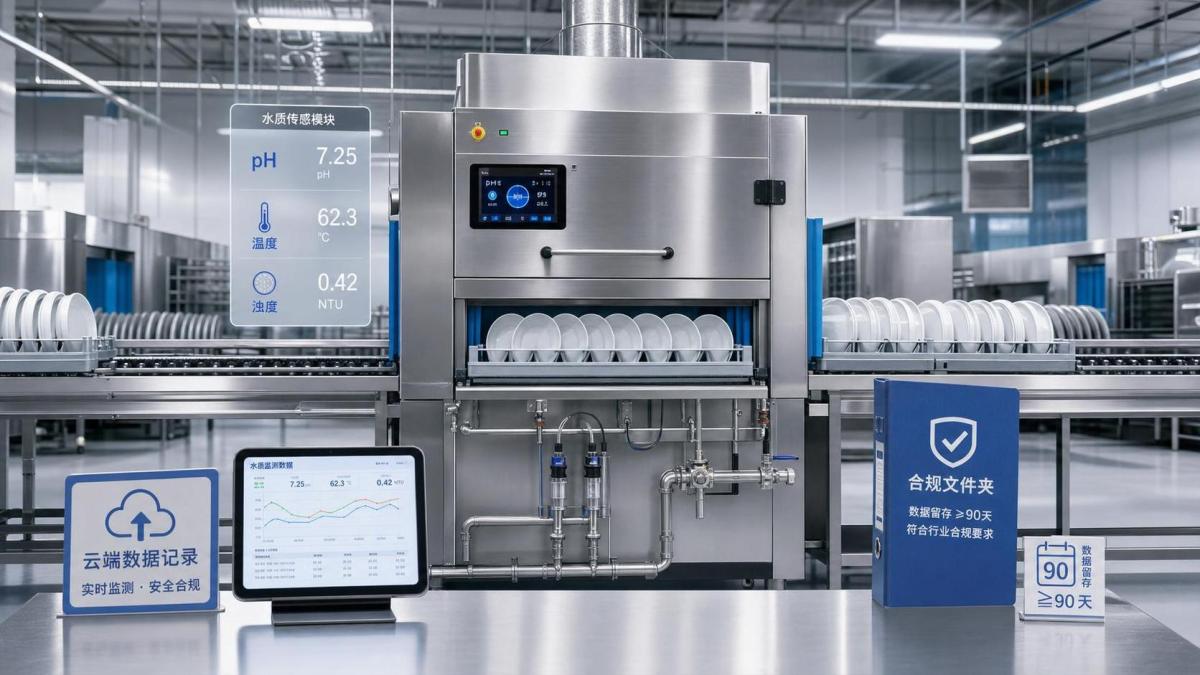
According to the information provided, the FDA released IoT Commercial Dishwashing Lines Guidance v2.1 on June 21, 2026. The guidance requires all commercial dishwashing lines entering the U.S. market to integrate a certified real-time water quality sensing module covering three parameters: pH, temperature, and turbidity.
The same update also requires cloud-based record retention for at least 90 days. The new rule is scheduled to take effect on October 1, 2026, and it affects U.S. distributor access requirements as well as OEM private-label cooperation terms.
Where the Pressure Is Likely to Appear First
Manufacturing and product integration move to the front line
From an industry perspective, equipment manufacturers may be affected first because the guidance directly addresses what must be built into products entering the U.S. market. The main impact is likely to appear in product configuration, certified module integration, and delivery readiness for models intended for U.S. distribution.
OEM arrangements may face contract-level adjustment
Analysis shows that OEM and private-label cooperation could be affected where responsibilities for sensor integration, certification status, and data retention are not clearly defined. The business impact is likely to center on specification alignment, compliance documentation, and responsibility sharing between brand owners and production partners.
Distributors in the U.S. market may tighten entry screening
Observably, distributors may need to pay closer attention to whether incoming equipment meets the new guidance before listing, stocking, or onboarding products. The practical impact is likely to fall on supplier qualification review, document collection, and channel access decisions tied to compliance readiness.
Commercial buyers and service-side users may reassess procurement criteria
For procurement teams and downstream users, the update may shift attention toward whether equipment can provide the required real-time monitoring functions and maintain cloud records for the stated period. What deserves closer attention is whether compliance expectations begin influencing purchasing specifications, acceptance checks, and after-sales coordination.
What Companies Should Track Before October 1
Watch how the rule is described in business documents
Analysis shows that companies should focus not only on the guidance text itself but also on how its requirements are reflected in quotations, technical schedules, distributor onboarding materials, and OEM agreements. The key issue is whether certified sensing modules and 90-day cloud retention are described clearly enough to support execution.
Check model scope and U.S.-bound product planning
What deserves closer attention is the distinction between general product portfolios and equipment specifically intended for the U.S. market. Companies with multiple variants may need to review which commercial dishwashing lines fall within U.S. market entry plans and whether current configurations match the new requirement.
Prepare compliance records and supplier coordination early
Observably, the requirement touches both hardware integration and data recordkeeping. That means businesses may need to coordinate across component suppliers, system integrators, and channel partners on certification status, data retention capability, and the supporting materials needed for customer or distributor review.
Separate policy wording from operational readiness
From an industry perspective, one practical risk is assuming that acknowledgment of the rule is the same as operational compliance. Companies may need to assess whether the required pH, temperature, and turbidity functions are actually integrated and whether cloud retention can be maintained in a way that supports market-facing commitments.
Why This Looks Like More Than a Short-Term Adjustment
Analysis shows that this update can be read as a concrete compliance signal rather than a routine wording change, because it names specific sensing parameters and sets a clear data retention expectation. At the same time, it is more appropriate to understand this as an active implementation-stage development rather than a fully settled market outcome, since the business response across supply chains, contracts, and channel practices still needs to play out before and after the October 1, 2026 effective date.
Observably, the most important point is not only that monitoring is required, but that monitoring must be certifiable and traceable in cloud records. That combination suggests the industry should keep watching how technical integration and commercial acceptance standards begin to align in practice.
How This News Is Best Interpreted Now
At this stage, the FDA update is best understood as a near-term compliance change with broader long-term signaling value for U.S.-bound commercial dishwashing equipment. It does not by itself define every downstream market result, but it clearly raises the threshold for product configuration, documentation, and channel coordination.
A neutral reading is that the rule creates an immediate preparation window ahead of October 1, 2026, while also indicating that real-time water quality data and retention capability are becoming more central to U.S. market access in this product category.
Basis of This Article and Follow-up Verification
This article is based on the user-provided news title, event date, and event summary concerning the FDA update released on June 21, 2026. The specific official source link was not provided in the input, so continued verification remains necessary.
For this type of development, commonly relevant source categories may include official agency notices, company statements, industry association updates, authoritative media reporting, and standards-related documents. Follow-up attention should remain on any later official clarification, implementation wording, distributor entry requirements, and OEM contract adjustments related to the guidance.
Search News
Popular Tags
Reserve Your Copy
COMPLIMENTARY INSTITUTIONAL ACCESS
Trusted by procurement leaders at
Get weekly intelligence in your inbox.
No noise. No sponsored content. Pure intelligence.
Recommended News