
FDA Tightens IoT Dishwashing Line Filing Rules
On June 20, 2026, the U.S. FDA released an updated guidance document for commercial dishwashing lines used in foodservice facilities, adding a clearer compliance threshold for smart equipment submitted under 510(k). For suppliers exporting Commercial Dishwashing Lines to the U.S., the change is notable because it links product acceptance more directly to verified real-time water quality sensing and remote data access, with implications for certification preparation, technical documentation, procurement choices, and delivery planning.
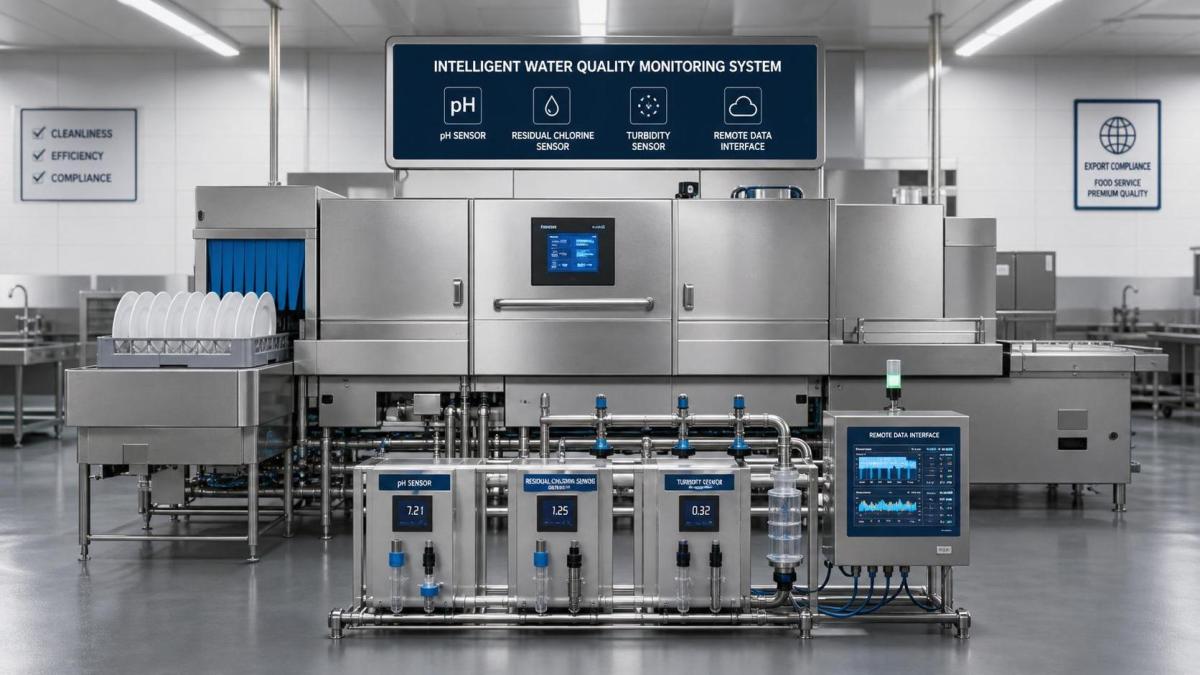
What the updated guidance now requires
The FDA issued Commercial Dishwashing Lines for Foodservice Facilities – IoT Integration Guidance v2.1 on June 20, 2026. According to the provided event summary, all smart dishwashing lines submitted for 510(k) must integrate validated real-time sensing modules for water quality parameters including pH, residual chlorine, and turbidity. The guidance also requires an API interface so that health regulators can remotely access relevant data. The new requirement applies to suppliers of Commercial Dishwashing Lines exporting to the U.S.
Where the immediate pressure points may appear
Export-facing equipment suppliers may need to reset filing preparation
From an industry perspective, suppliers that plan to sell smart commercial dishwashing lines into the U.S. market are the first group likely to feel the impact. The reason is straightforward: the guidance ties 510(k) submissions to the presence of validated sensing functions and remote data access capability. In practice, this may affect product configuration, submission materials, technical file completeness, and the timing of export delivery linked to certification readiness.
Component sourcing may shift toward verifiable sensor capability
For procurement and manufacturing teams, the change may move attention upstream to sensor modules and interface architecture. Analysis shows that when pH, residual chlorine, and turbidity monitoring become mandatory modules rather than optional add-ons, companies may need to review whether existing sourcing arrangements, validation records, and system integration plans still match filing expectations. What deserves closer attention is not only the hardware itself, but also whether supporting documentation can demonstrate that the module is validated.
Compliance and testing service providers may see a narrower documentation focus
Certification-related service providers and testing support teams may also be affected because the rule change points to more explicit evidence requirements around sensing performance and data accessibility. For these participants, the main impact may appear in test planning, technical dossier preparation, and interface-related compliance review, especially where exporters rely on external partners to assemble submission packages.
Buyers and after-sales teams may need closer attention to data access obligations
For buyers, distributors, and service teams handling installed systems, the new API requirement signals that data availability is no longer only a product feature question. Observably, it may become relevant to procurement specifications, acceptance conditions, service documentation, and traceability expectations after delivery, particularly where customers want assurance that equipment can support regulator access requirements.
What companies should examine now
Review whether current smart models match the new filing baseline
Companies preparing U.S.-bound models should closely compare existing smart dishwashing line configurations with the newly stated requirement for validated pH, residual chlorine, and turbidity monitoring, as well as API-based remote data access. If current designs treat these items as optional or partially integrated, that gap may matter at the submission stage.
Check technical files and submission materials for evidence depth
Analysis shows that the practical question is not only whether a function exists, but whether supporting materials are organized in a way that aligns with certification review. Exporters may need to focus on validation-related records, interface descriptions, and product documentation that clearly connect the required modules to the 510(k) filing package.
Watch procurement and delivery schedules for compliance-driven adjustments
Where products are already in planning, sourcing, or delivery preparation for the U.S. market, teams may need to reassess whether component lead times, integration work, or documentation readiness could affect shipment timing. It is more appropriate to understand this as a compliance planning issue rather than only a design update.
Continue tracking how the requirement is reflected in market documents
Because the provided information does not include further implementation detail, companies should continue watching for how the guidance may be reflected in official wording, certification practice, customer specifications, tender documents, and related compliance communication. At this stage, that follow-up remains a monitoring task rather than a confirmed outcome.
Why this looks like an execution signal, not just a wording update
Observably, this development is more than a general policy statement because it identifies specific sensing categories and requires an API for regulator access. Analysis shows that this makes the change easier to interpret as an operational compliance signal for exporters, especially those positioning IoT-enabled equipment for the U.S. market. At the same time, it would be premature to treat all downstream effects as settled, since the provided information does not include additional detail on review practice, implementation rhythm, or market feedback.
How the market may best read the change for now
The update is best understood as a concrete tightening of filing expectations for smart Commercial Dishwashing Lines exported to the United States. Its immediate relevance lies in certification readiness, component selection, documentation quality, and remote data access capability. From an industry perspective, the most balanced reading is that the rule change has already established a clearer compliance direction, while its full execution impact on procurement, delivery, and service workflows still deserves continued observation.
Basis of this article and what still needs verification
This article is generated from the user-provided news title, event date, and event summary. Source types commonly relevant to developments of this kind may include official regulatory releases, notices from supervisory authorities, trade or customs information, industry association updates, standards documents, and reporting by authoritative media. No specific official source link was provided in the input, so the exact source document path still requires ongoing verification. It also remains necessary to monitor any later detail on implementation wording, certification interpretation, tender document changes, industry feedback, and how companies execute the requirement in practice.
Search News
Popular Tags
Reserve Your Copy
COMPLIMENTARY INSTITUTIONAL ACCESS
Trusted by procurement leaders at
Get weekly intelligence in your inbox.
No noise. No sponsored content. Pure intelligence.
Recommended News