
The EU PPWR is fully effective and food equipment export packaging must comply immediately
On August 12, 2026, the EU’s Packaging and Packaging Waste Regulations (PPWR, EU 2025/40) entered the full enforcement stage. For food processing equipment export enterprises, not only the complete equipment body is affected, but also the transportation packaging, cushioning materials, composite color boxes and label backing papers are all included in the scope of unified supervision. Importers and all links in the supply chain need to simultaneously complete the proportion of recycled materials, recyclability labels, material restrictions and technical documentation requirements. For related export businesses such as vacuum tumblers, meat slicers, vegetable washing lines, and commercial freezers, this is more like a compliance threshold that has been implemented, rather than a simple policy reminder.
Packaging supervision shifts from single market requirements to unified rules
PPWR implements unified supervision on packaging entering the EU market in the form of regulations, which is the core of this change. According to the confirmed information, the restricted objects are no longer limited to a single packaging type, but cover transportation packaging, cushioning materials, composite color boxes and label backing papers that are common in the export process of food equipment. Importers need to ensure that packaging meets requirements such as recycled material ratio, recyclability labeling, substance restrictions (such as PFAS), and complete technical documentation; if they do not comply, they may face customs seizure and be fined 2% to 6% of annual turnover.
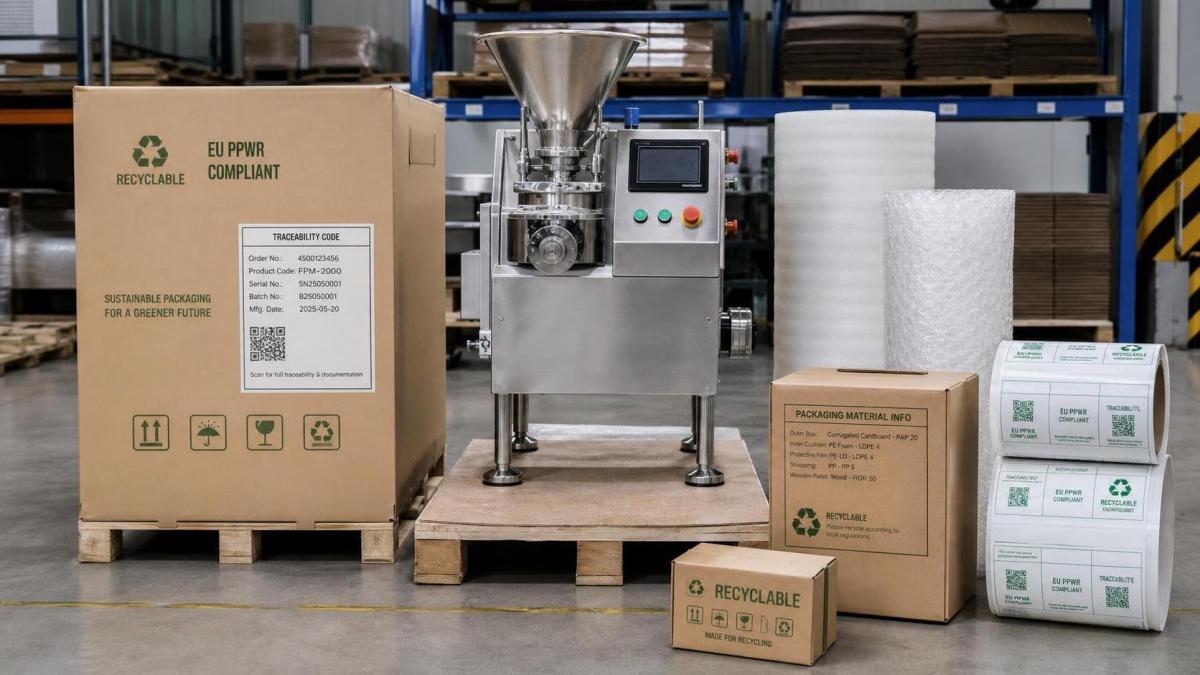
This means that packaging compliance is no longer an ancillary matter on the logistics side, but a necessary prerequisite for entering the EU market. For export operations, packaging materials, label design, documentation and delivery rhythms are all brought back into the same review logic.
From equipment manufacturing to cross-border delivery, more than one link is affected
Export complete machine companies have to handle both product and packaging lines at the same time
Vacuum tumbling machine, meat Export companies of food equipment such as slicers, vegetable washing lines, and commercial freezers used to pay more attention to the technical parameters, certification documents, and trade terms of the equipment itself; after the full enforcement of PPWR, the packaging system will also directly affect the smooth delivery of goods. Whether the packaging contains a proportion of recycled materials within the required range, whether it meets the recyclability labeling requirements, and whether it involves restricted substances will all become content that must be checked before delivery.
The audit pressure on importers and purchasers will increase simultaneously
For importers, purchasers and distributors on the EU side, the risk lies not only in whether the receipt of goods is delayed, but also in whether the chain of responsibility is complete. Importers are explicitly required to ensure packaging compliance, so procurement contracts, order confirmations and arrival acceptance are likely to place more emphasis on packaging declarations, technical documents and supplier commitments. If the purchaser still follows the old habit of only looking at the complete machine data, there may be pressure to replace parts during the customs clearance and warehousing stages.
Packaging supply chain and document services will be brought back to the forefront
Packaging material suppliers, label backing paper suppliers, outer box and buffer material supporting companies, as well as related testing or document sorting services, may all be more frequently included in the early selection of export companies. The reason is straightforward: PPWR requires not only the material itself, but also a verifiable and traceable document chain. For equipment export projects with tight order cycles and fixed delivery nodes, if such data preparation is delayed, the delivery date will often be directly squeezed.
What compliance actions should we focus on now?
Check the packaging list first, and then see if the document can close the loop.
What deserves more attention now is whether the packaging material list can correspond to the PPWR requirements. Enterprises need to clearly list the transportation packaging, cushioning materials, composite color boxes and label backing papers, and then check item by item whether there are any gaps in the proportion of recycled materials, recyclability labels, material restrictions and technical documentation. The focus here is not on the form, but on whether a closed loop can be formed in customs clearance, procurement and internal review.
Move packaging requirements forward to the quotation and production scheduling stage
From the analysis, such rules are most likely to affect the delivery rhythm, rather than the individual order price itself. If the packaging materials, labeling scheme or document preparation need to be adjusted, it is best for the company to confirm the relevant requirements clearly during the quotation and production scheduling stages, otherwise subsequent rework will directly affect the packing, shipping and arrival nodes. This is especially critical for the equipment export business, which is mainly based on project delivery.
Pay attention to the changes in enforcement standards on the importer's side
Since the confirmed information emphasizes the responsibility of the importer, companies cannot just focus on the shipping side. A more realistic approach is to continue to pay attention to changes in the actual document requirements of importers, purchasers and customs clearance chains, including whether more detailed packaging instructions, technical documents or compliance statements need to be added. There is currently not enough information to indicate that the enforcement details have been completely unified, so it is more suitable to understand it as a signal of the rules that have been implemented, rather than a stable compliance process that has been completed.
This is more like an execution signal, rather than a negligible dynamic
From observation, the significance of this comprehensive enforcement of PPWR is not that it puts forward a certain isolated requirement, but that it changes packaging compliance from a peripheral issue to a formal threshold in cross-border transactions. For food equipment export companies, packaging, documentation and delivery are no longer separate links, but different nodes on the same compliance chain.
Therefore, this information is more suitable to be understood as a rule change that has entered the enforcement stage. Its direct impact on the industry is mainly reflected in the data preparation, packaging selection, procurement coordination and delivery arrangements of export enterprises; what still needs to be observed in the future are official details, enforcement standards, procurement document requirements and actual enforcement feedback from enterprises.
How to understand the current conclusion
Judging from the currently confirmed information, the EU PPWR has come into full effect and has put forward immediate compliance requirements for the export packaging of food processing equipment, and the scope of impact has covered the conventional supporting links for the export of complete machines. For relevant Chinese companies, the most realistic change is not an abstract policy statement, but that packaging materials, technical documents and delivery nodes must be recalibrated according to new rules. At present, it is more appropriate to regard this information as a regulatory change that has begun to be implemented. The follow-up focus is still on whether the enforcement details continue to be tightened and whether all parties in the supply chain can keep up in time.
Public information based on this article
This article is generated based on the information title, event time and event summary provided by the user. It does not introduce specific data, company names or source links that are not provided. Types of information typically associated with such events include official announcements, regulatory agency releases, customs or trade authority information, industry association information, standards organization documents, and authoritative media reports. Since no specific official source link is provided in the input, the relevant official original text still needs to be continuously verified, and the policy details, certification enforcement standards, changes in bidding documents, industry feedback and enterprise enforcement will be focused on.
Search News
Popular Tags
Reserve Your Copy
COMPLIMENTARY INSTITUTIONAL ACCESS
Trusted by procurement leaders at
Get weekly intelligence in your inbox.
No noise. No sponsored content. Pure intelligence.
Recommended News